![[Steve & Megan's Travelog]](../images/banner.jpg)
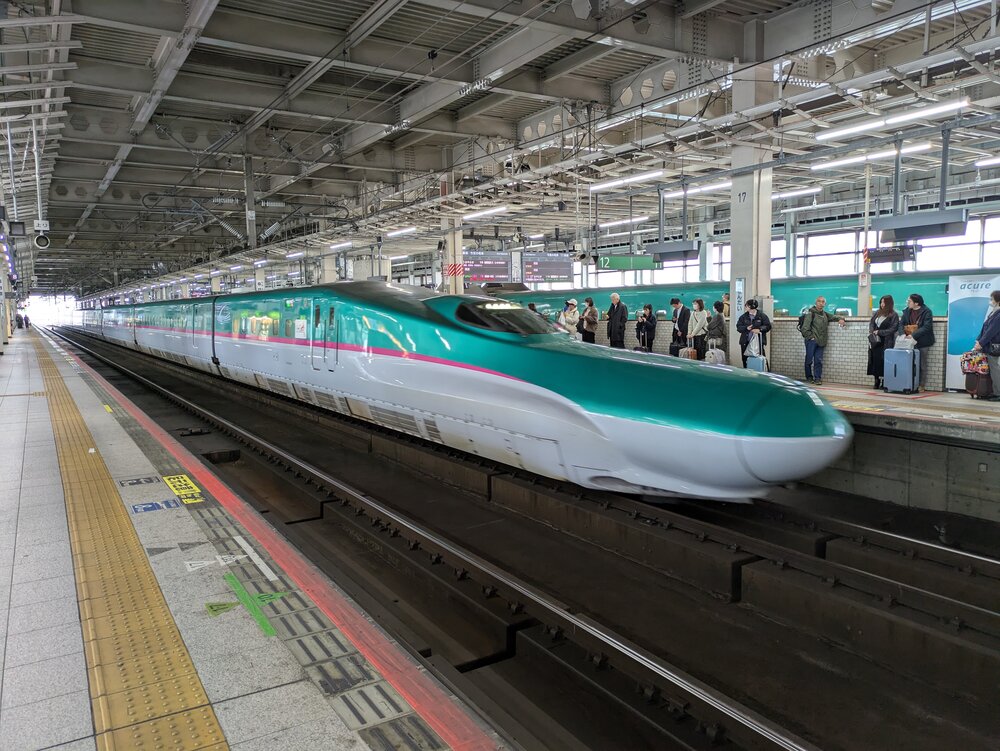
The trip from Sendai to Utsonomiya is 146 miles or 1 hour 14 mins (including 4 stops) on the Tōhoku Shinkansen, using the high speed Yamabiko (Mountain Echo) train. Unbeknown to us, this section of line is the fastest part of the entire Shinkansen network with a maximum speed of 199mph. Needless to say, we recorded that exact speed en route. It's rather good having already clocked the highest speed the network has to offer because now we can spring for the slightly slower Shinkansen on future legs since they are a bit cheaper and we are not really in a rush. In fact, on days where we use such trains, we are changing hotels and we are not allowed to check in until 3pm, so arriving early is not an advantage.
Also unbeknown to us, was the fact that we had booked into a hotel that has a spar included. This is a kind of purpose built onsen just for guests. Fresh from our success with the onsen at the Hotel Ragaso in Tanohata, we were keen to try this one. Steve has rather taken to the onsen concept, and this one became particularly popular when we discovered one could sit in the hot bath on the 14th floor and look at Mt Fuji - and also watch the Shinkansen hurtle by. Luxury! After a day or so, we also discovered that we actually had a view of Mt Fuji from our room too. Slumming it in Utsonomiya we are not!
Utsonomiya
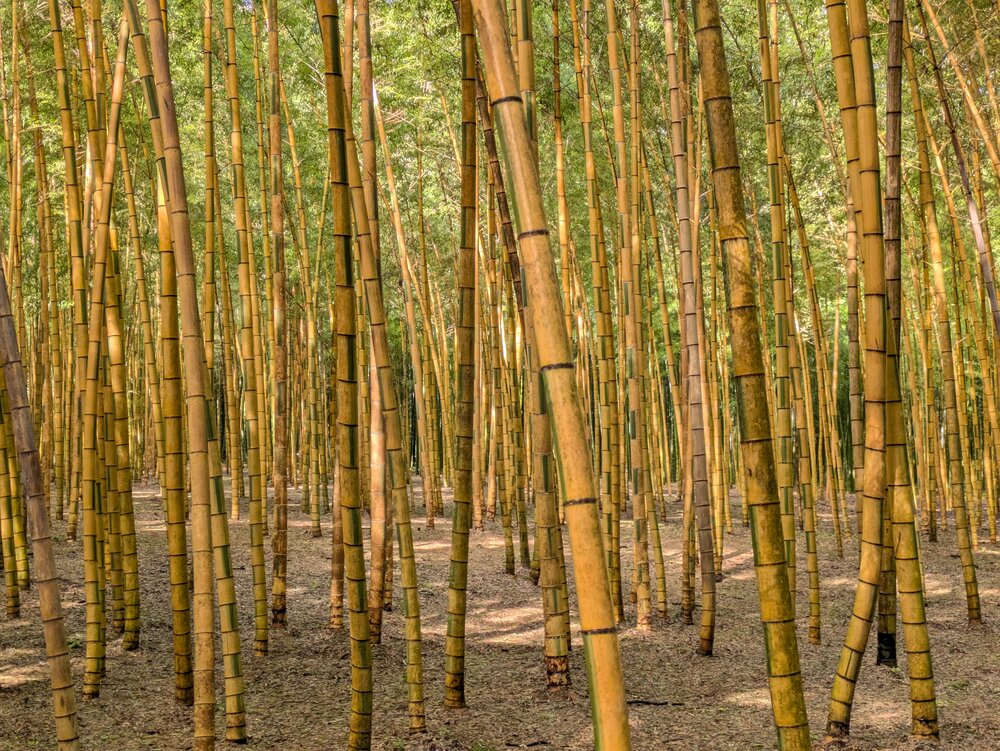
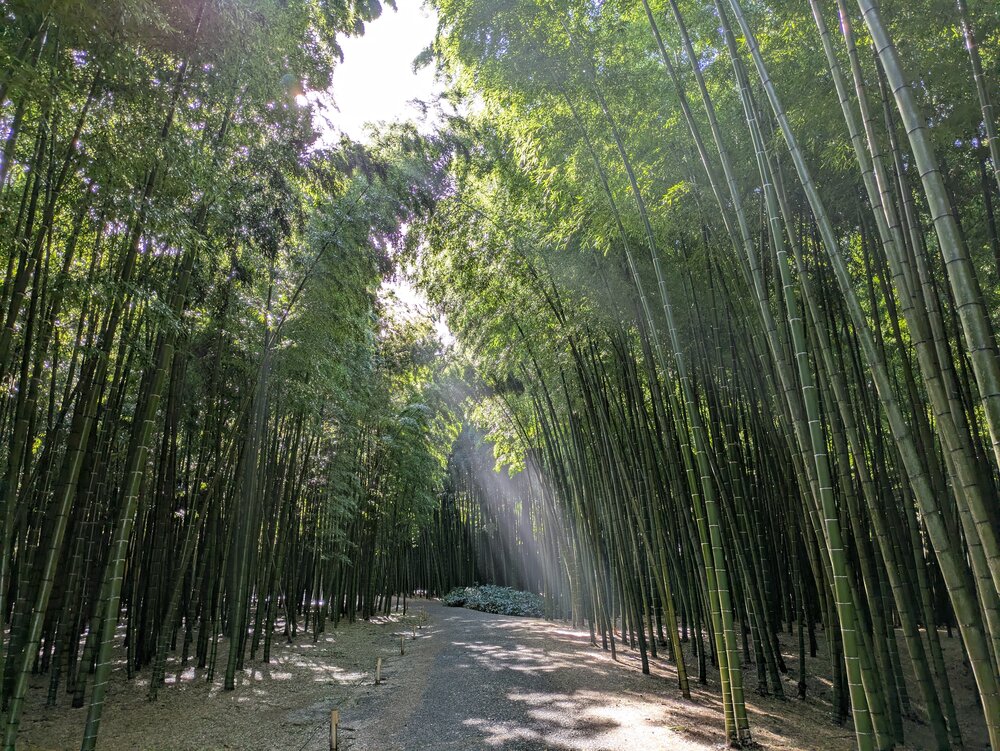
Last time we were in Japan, we stayed in Kyoto and took a trip out to see the local bamboo grove which is a major tourist draw in that area. The bamboo was certainly impressive, but the place was rammed with tourists. Utsonomiya is not a significant destination for tourists - anything visitors want to see can largely be visited on a day trip from Tokyo. Consequently, half an hour out of town on a local bus got us to the Wakayama Bamboo farm, where we had the place pretty much to ourselves. It is also much bigger and better than Kyoto's offering. It was interesting to see the different types of bamboo growing next to each other. It was also interesting to learn, in the small museum, that when Edison invented the light bulb, he used bamboo for the filament. There is a company in Japan that still manufactures bulbs in this manner.
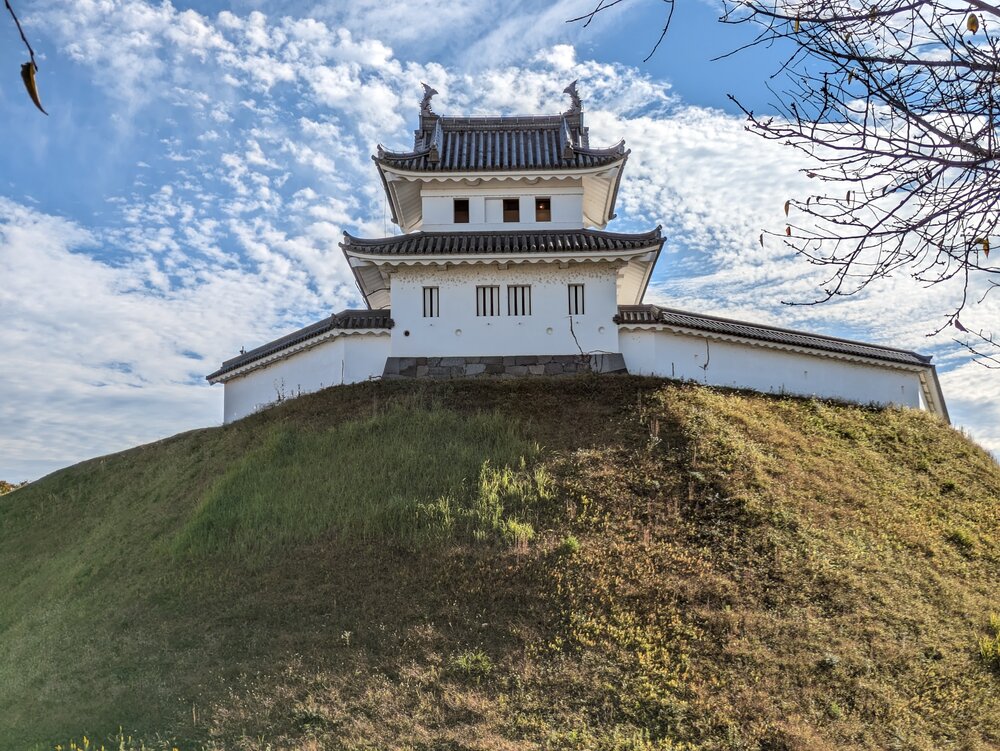
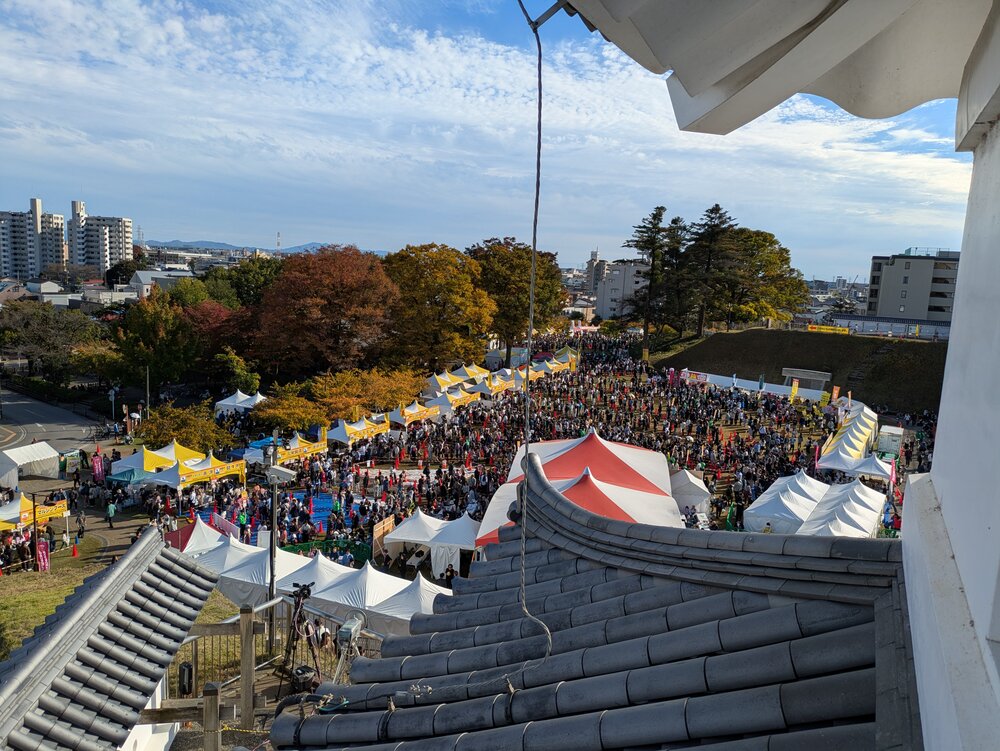
We are into a holiday weekend in Japan, so the locals are on the move and doing their own tourism, which is fair enough although a bit inconvenient for yours truly. Wandering about Utsonomiya, we stumbled across a Jazz festival where locals came over to try and explain to us what was going on - which was very nice of them, but hardly necessary where jazz is concerned. We also visited the local castle which is tiny and, on this day, was dwarfed by a Gyoza festival in the castle grounds. Gyoza is a fried dumpling that the Japanese have appropriated (and improved) from the Chinese. The festival was rammed with locals so we gave it a miss. We do like a good gyoza, but they are available pretty much everywhere, so a two hour queue to buy them from a market stall did not appeal. Queuing for food is something the Japanese enjoy that we don't.
Talking of which, on the Sunday night, in the middle of the culture weekend, Utsonomiya was so crowded with visitors, we struggled to find somewhere to eat. When entering a Japanese restaurant, it is customary to hold up a number of fingers indicating how many people are in your party. So we always indicate two. It turns out that, when the waitress immediately indicates "two" to you, that is not her guessing how many are in your party, but how many hours you will have to queue for a table. Needless to say, we retreated. For the first time on this trip we bailed from Japanese food when we discovered an Indian restaurant that was virtually empty.
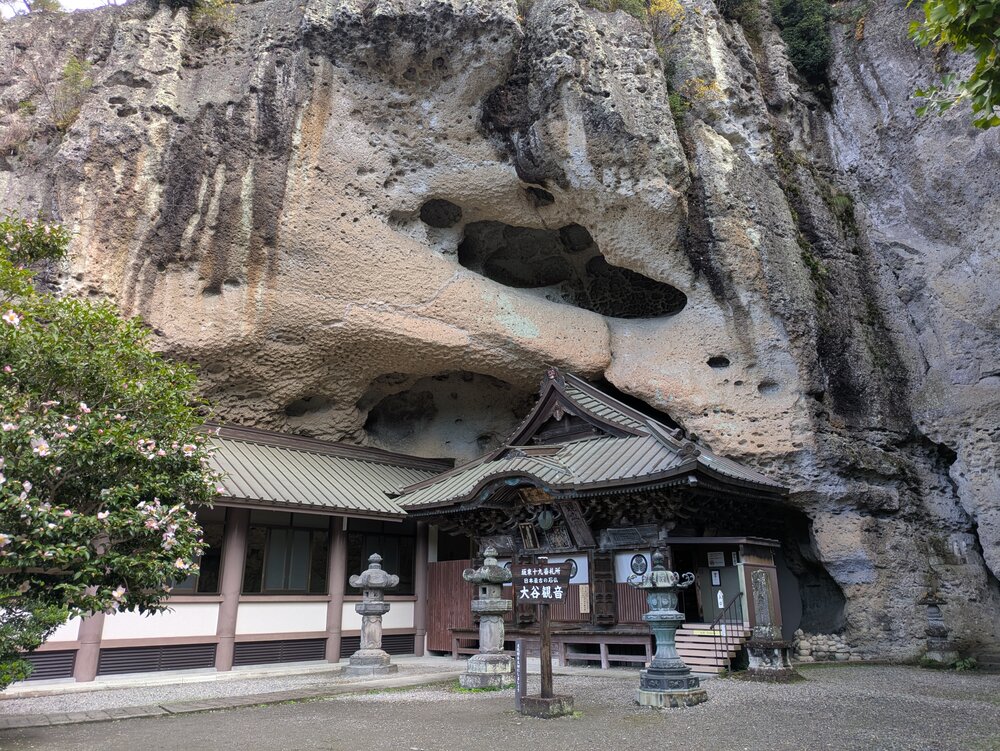
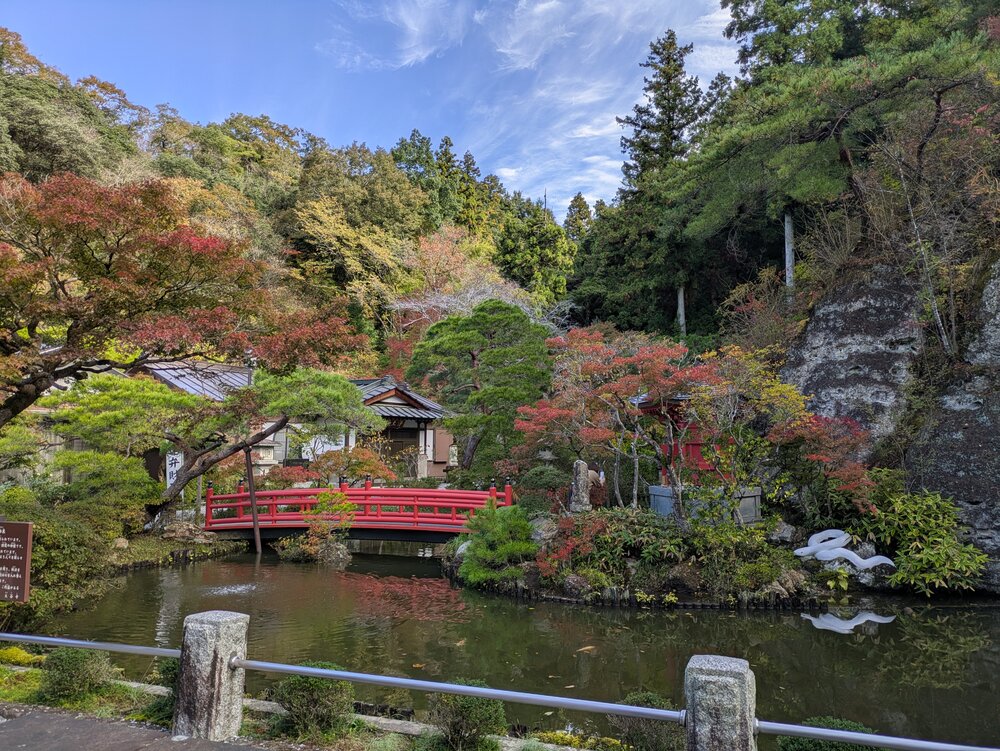
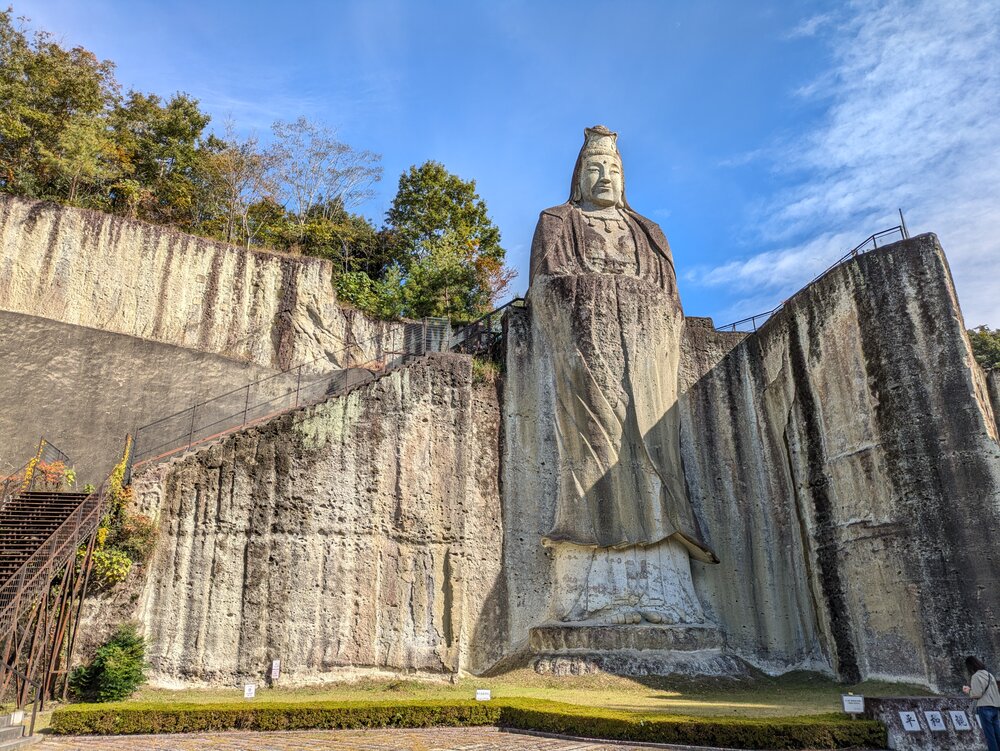
Next day, we took another bus out to the site of an old quarry. The reason for this was a) to see a temple that had been carved into the rocks (the Oya Temple) and b) to visit the quarry itself and a museum dedicated to the quarrying of Oya stone as it's called. The temple (also known as Ōya-dera) appeared to be the usual wooden affair from the front, but this was a mere façade. Inside the temple are a bunch of bas-relief carvings of Buddhist deities. Being a Buddhist site, we had to pay to get in. There is also a small museum where artifacts were displayed that had been found when the original caves were excavated, including some 11,000 year old pottery and bones from our old friends the Jōmon. There was also a rather picturesque garden alongside the temple. Over the road, carved into the rock face is the 27m high Oya Kannon Buddha which was worth a look.
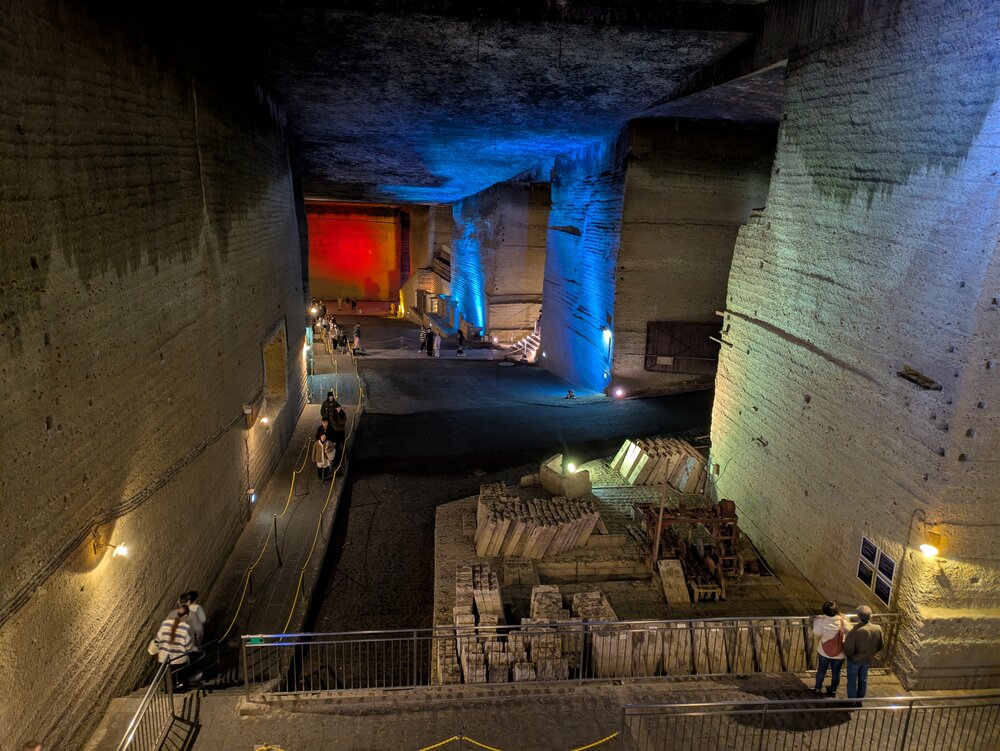
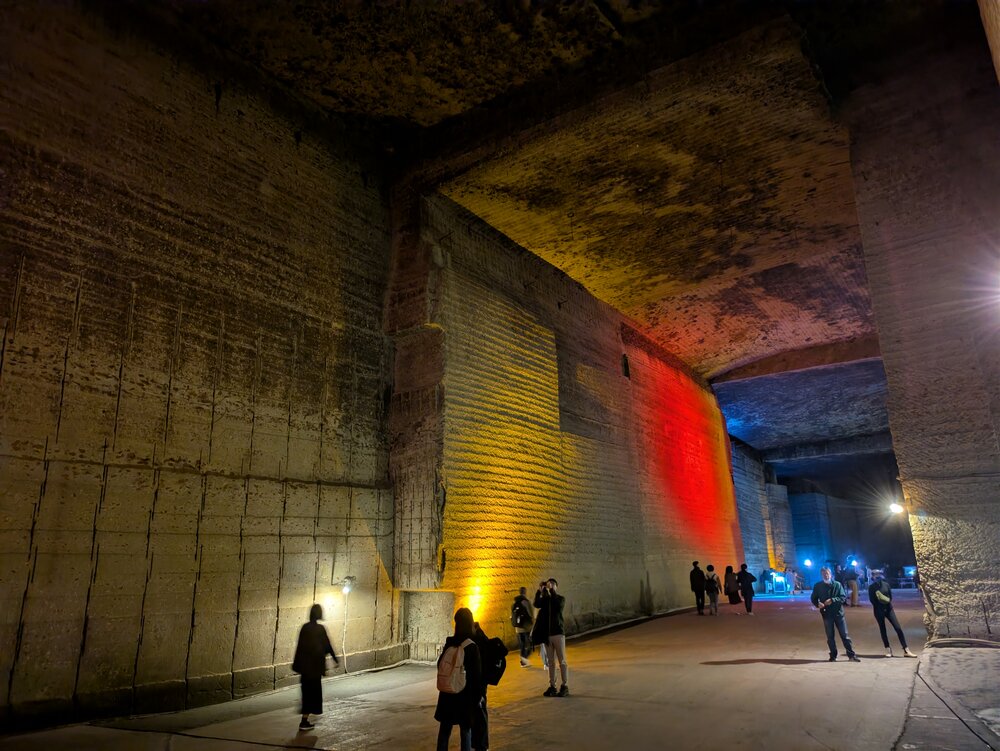
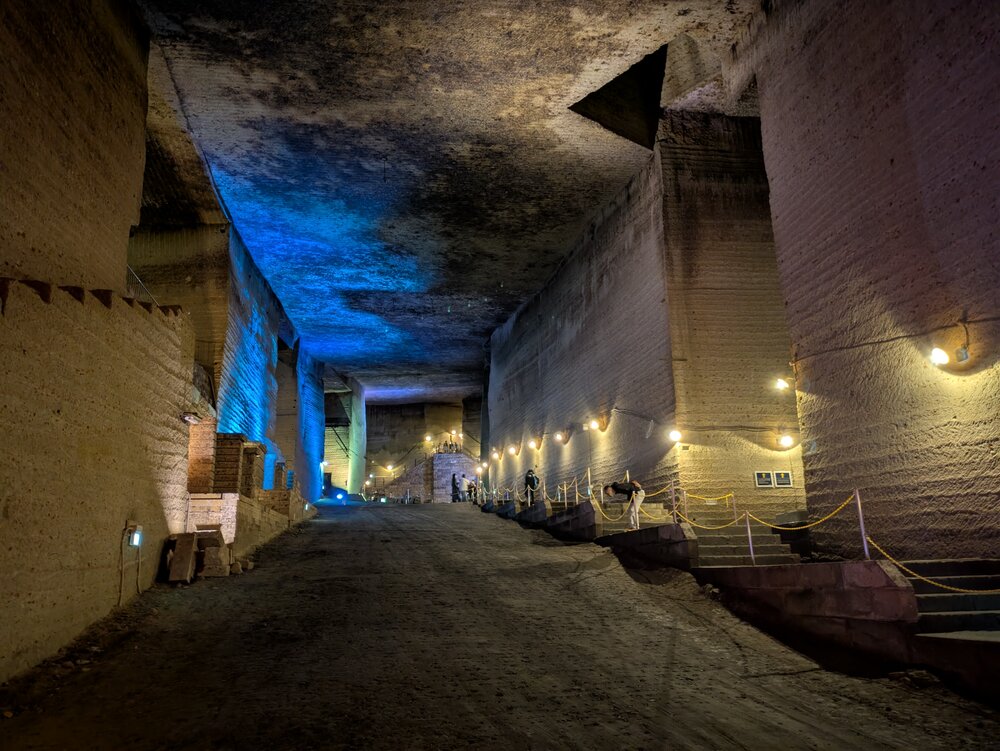
Having seen the temple, we proceeded to the quarry. The stone from this quarry used to be a prized building material until experts decided it was too soft to safely be used for this purpose. Subsequently, it was only used decoratively. The quarry is inside a hill and consists of immense, perfectly regular caverns from which the rock has been hewn by hand. Apparently it was last mined in 1985! Nowadays, the caverns are open to visitors and are spectacularly and imaginatively lit. Despite quite a large number of visitors when we went (as mentioned, it's a holiday weekend), the place did not seem at all crowded which is testament to its vast size. There was also a museum that told how the work was carried out by hand including the lugging of stone blocks weighing up to 130kg by individual miners.
Nikkō
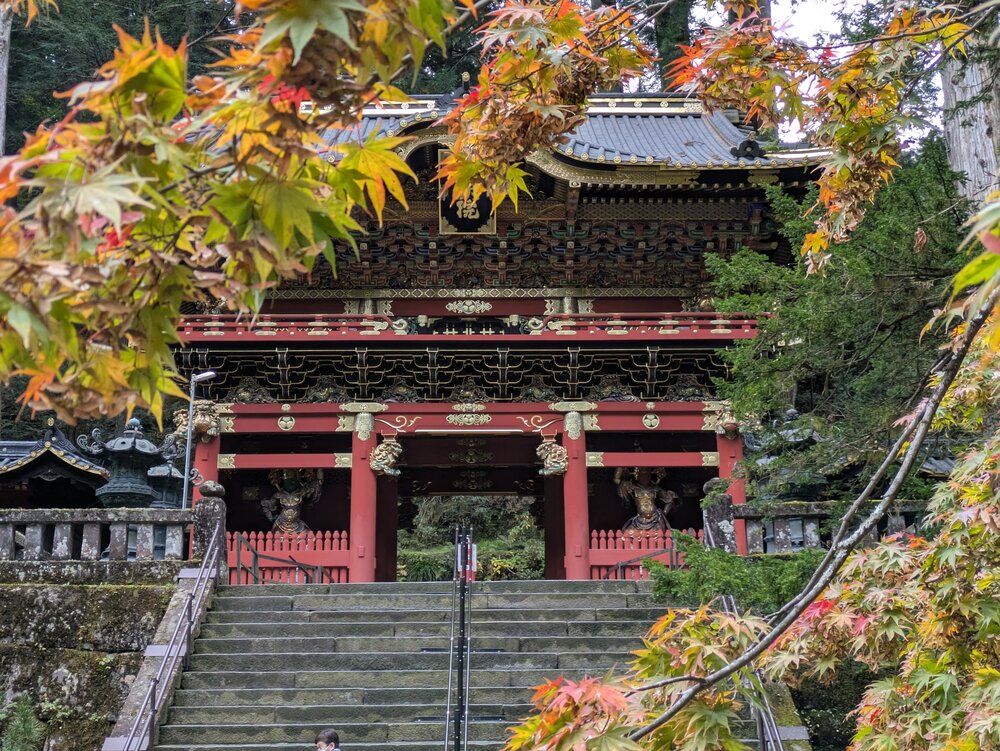
Some distance from Utsonomiya is the mountain gateway town of Nikkō. The town is famous for having a large collection of temples, many of which are considered national treasures. They are located on the side of a mountain nestling within the forest. Nikkō is accessible as a day trip from Tokyo, so it attracts many a day tripper. As chance would have it, we visited on Japan's Culture Day which forms part of this national holiday weekend. Consequently, the place was rather busy. Nonetheless, we managed to visit a number of the temples and shrines without too much ado by avoiding the most popular ones. Unless you are a temple aficionado, it is rather difficult to distinguish between them after a while, so we didn't feel we had missed out by skipping Tōshō-gū, which is supposed to be the most spectacular. It certainly had the most spectacular queue! We even squeezed in a little walk through the forested hillside to see some of the more remote buildings. Hardly anyone else bothered. Since Nikkō is quite a way out of Utsonomiya, we got up at the ungodly hour of 6am so as make a day of it.
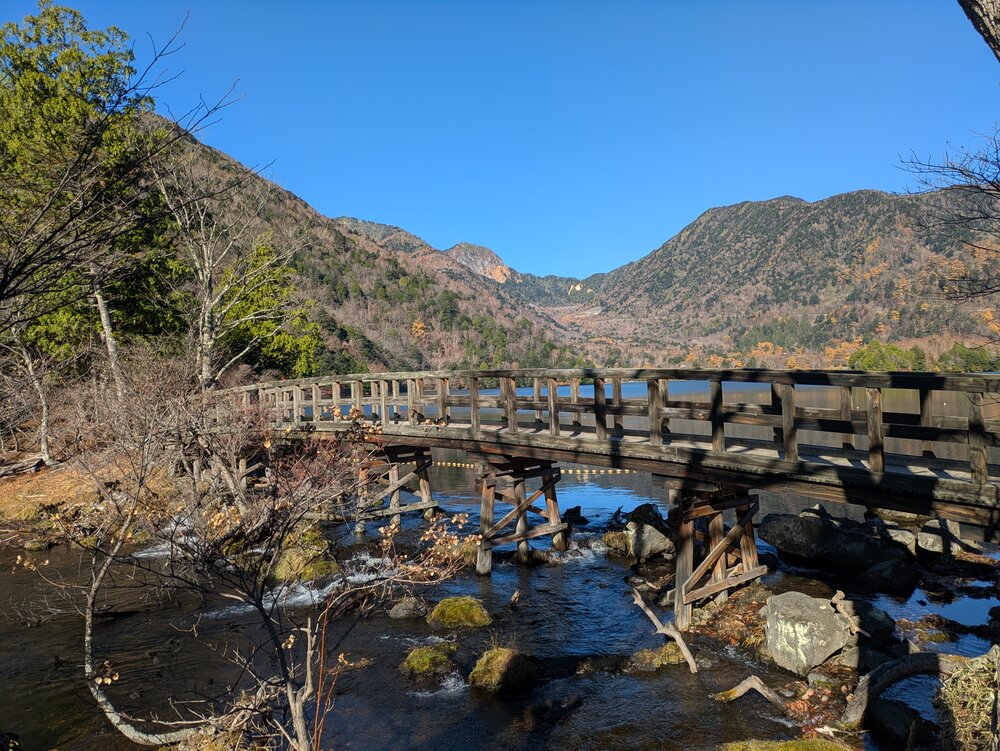
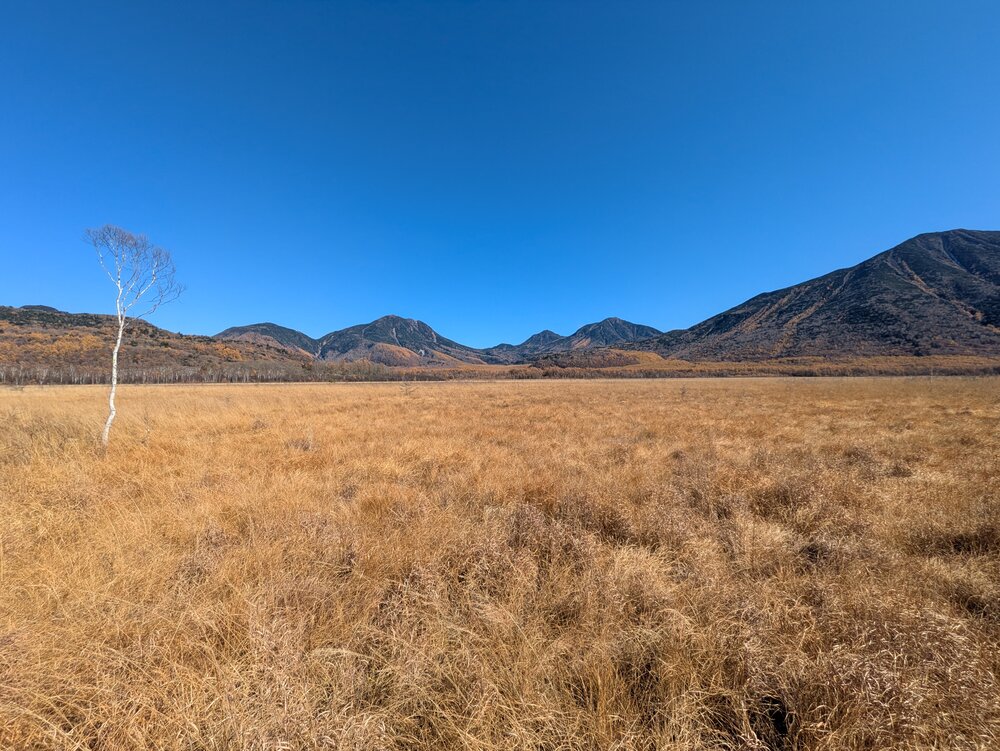
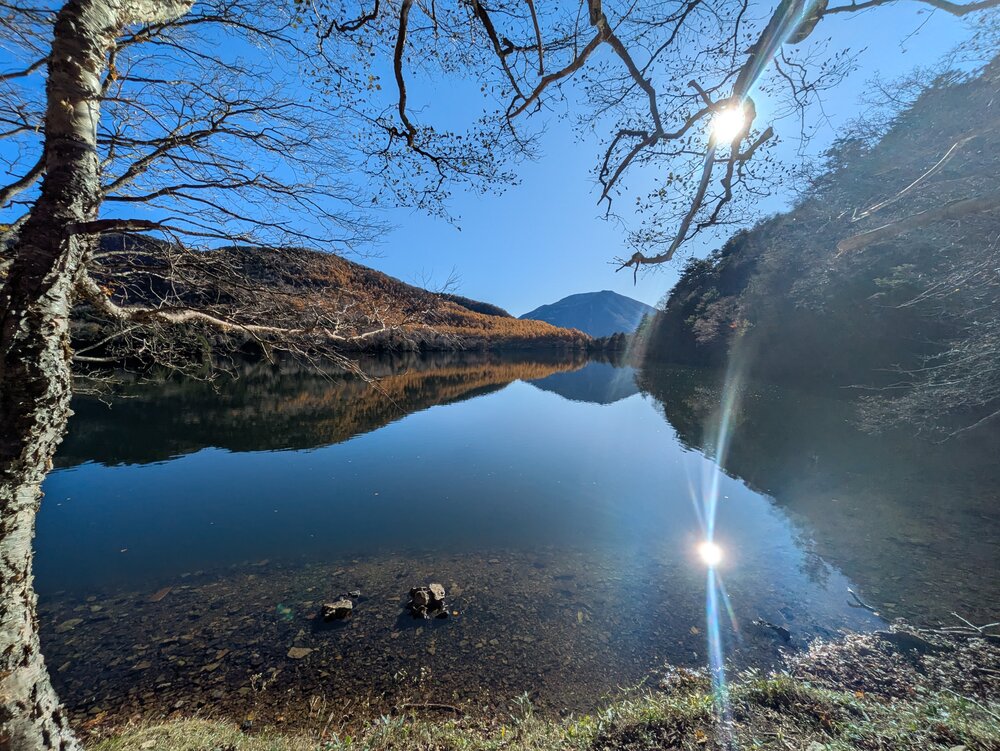
Further on from Nikkō is the hot spring mountain area of Oku Nikkō. In addition to the 45 min train ride to Nikkō, Oku Nikkō is another 80 mins by bus up a winding mountain road including a very impressive set of hairpins. Somewhat reminiscent of our experiences in Bolivia and Peru, but probably rather safer! This time we got up at 5am. We took the bus to the end of the line at Yumoto Onsen. From here, it was a spectacular 10 mile walk (mainly downhill) from the onsen town to Lake Chuzenjiko and the town of Chuzenji Onsen. Along the way, we passed Lake Yunoko, cascading mountain waterfalls, Japanese Oak forests and the Senjogahara wetland plateau. A very special walk and well worth getting up early for. And not in the least bit marred by the background smell of sulfur from the volcanic hot springs that facilitate the onsens' existence.
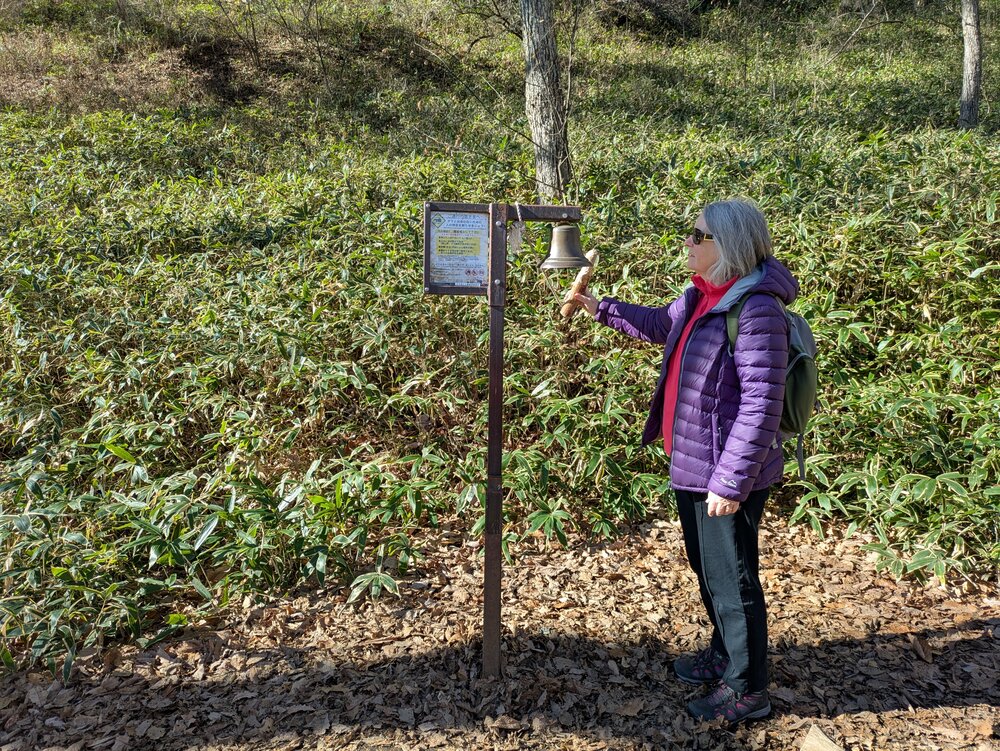
There is rather a frisson to hiking the wilderness in Japan at the moment due to the unusually high number of bear attacks. Apparently the beasts are starving due to a poor acorn crop this year. In addition, Japan's well document flight to the cities has left the rural areas depleted of inhabitants and this has emboldened the already hungry bears. Along the trail at various points there are bells that should be rung on passing so as to scare off any predators. At the time of writing we have not been mauled to death by starving ursines, so the bells clearly work.
It is getting cold in the north. In fact, the first snowfall of the season happened the day we went to Oku Nikkō. Apparently, this is quite auspicious. Really, it's just cold! Accordingly and as planned by Megan, we are heading south - and that means we have to pass through Tokyo. So, we have a few days in the smoke before heading on south to Okayama. More on all that later.
Some Pictures