![[Steve & Megan's Travelog]](../images/banner.jpg)
The trip from Tokyo down to Okayama takes about 4 hours on the Shinkansen, so it is no small distance. The Shinkansen can best be described as "relentless". It accelerates up to cruising speed as it leaves a station and simply remains at that speed come what may until it is time to decelerate for the next stop. It doesn't even slow down so that we can eat rice with sticks for lunch. The different types of trains have different names and we had decided to pay a little less for the Hikari rather than the Nozomi which can do the journey in less time. There didn't seem any point rushing since we couldn't check in until 3pm and rain was forecast all day. A side effect of this decision was that the Hikari spent about 2 mins stopped at some of the stations rather than the customary 1 min so that a Nozomi could hurtle past. The Nozomi doesn't really travel much faster than Hikari, it simply has less stops. This means that during our journey, there was a Nozomi somewhere between 1 and 2 mins behind us as we both travelled at about 180mph! When approaching a station, the announcement tells us that the train will depart "shortly after arrival" and that passengers should be ready to disembark the train before it stops - which is an interesting concept. One is inclined to cooperate if it avoids a Nozomi up the rear.
Okayama
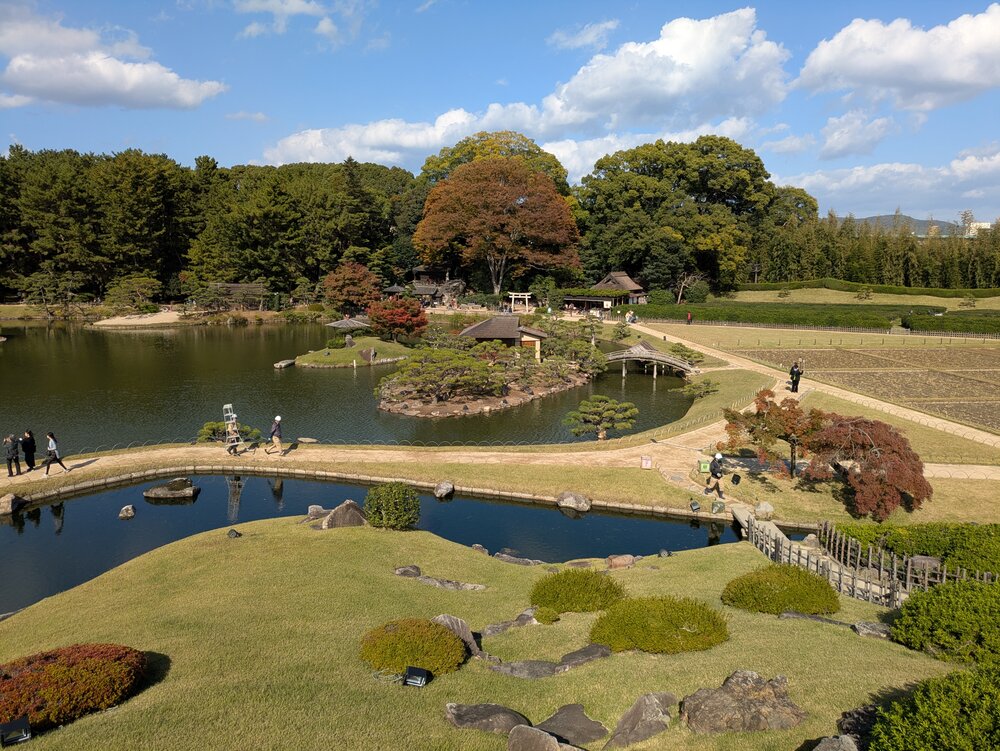
When we were in Kanazawa on our last trip, we visited Kenroku-en, one of the three great gardens of Japan. Located here in Okayama is another of the top three - Kōraku-en, so we had to visit. It is overlooked by an imposing black castle known as crow castle so called due to its colour. Sadly, the original was destroyed in 1945 and what stands now is a reconstruction. As a result, we did not pay to go inside. As for the gardens, they are indeed splendid and we spent a good few hours promenading along the winding pathways and admiring the various themed areas. In typical Japanese style, highly manicured lawns and flower beds are punctuated by streams, ponds and waterfalls. Somewhat reminiscent of a golf course in parts. Of course the Koi carp are ever-present. There are tea houses in the gardens as one might expect but whilst these establishments are happy to sell Mr Whippy ice cream alongside the matcha, they don't seem to want to serve coffee.
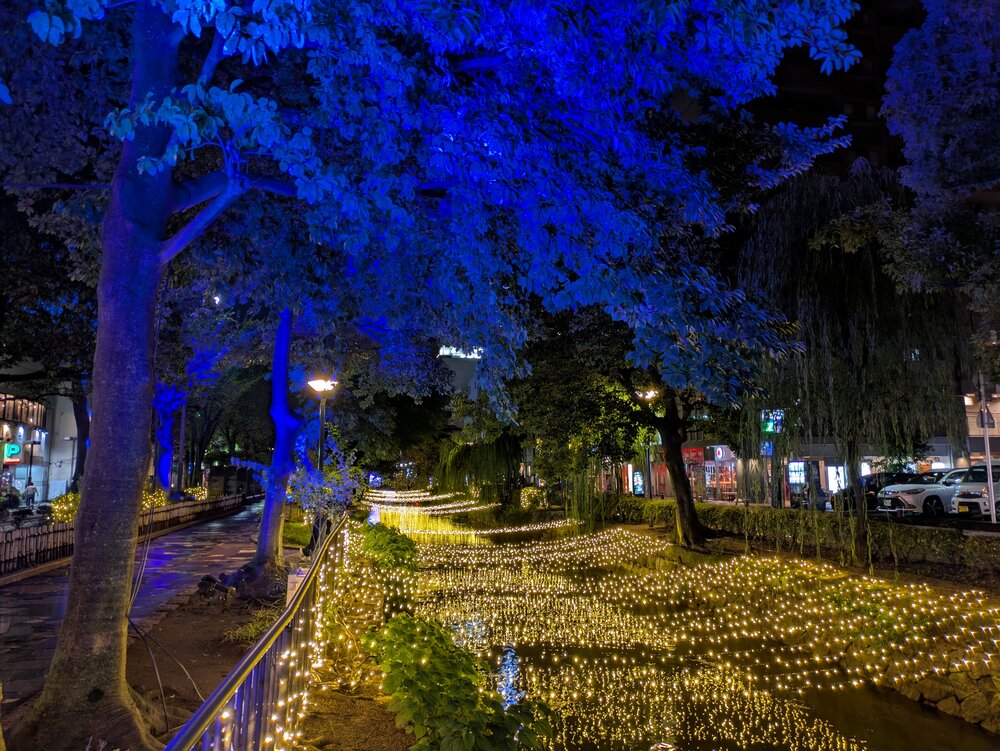
Okayama by night strikes us as a rather edgy place. There are plenty of bars - which is not something we have really seen thus far. There are even cafes that stay open all night. There are youths on the streets smoking - all in all, not what we expect. Interestingly, the only time we have been this far south before was on the last trip when we visited Hiroshima and we made the same observation there. The people down here seem to be less traditional - we have even spotted litter! That said, it all feels perfectly safe and somewhat naive by our standards - which is nice. The canal outside our hotel has been decorated with lights (presumably for Christmas) and it does not appear that any of them have been vandalised - how quaint.
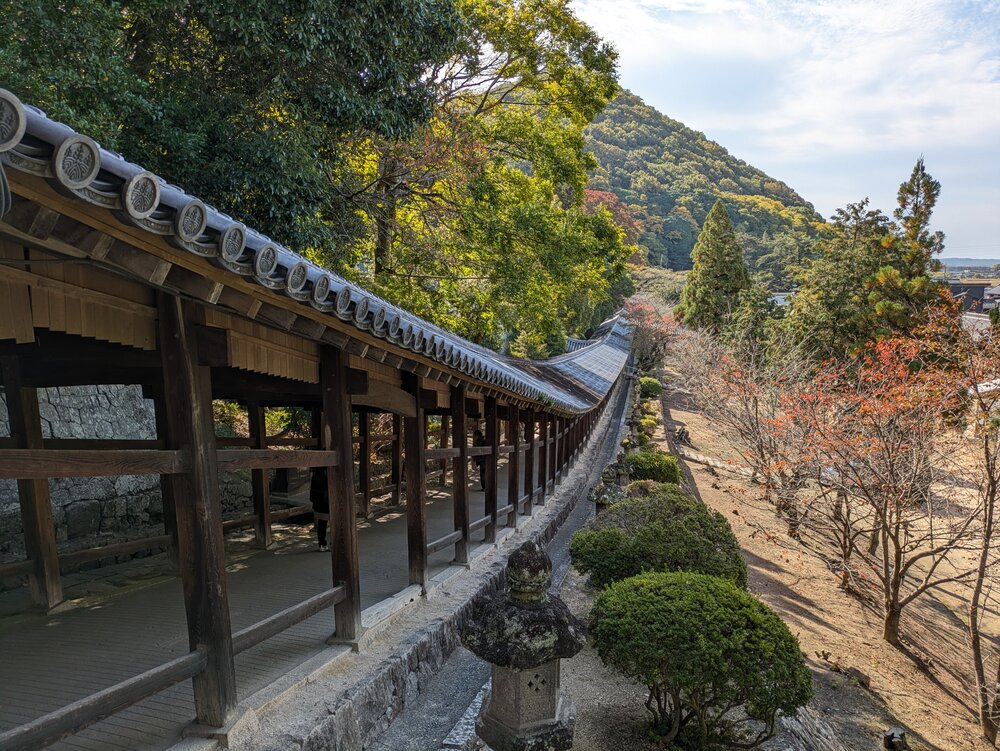
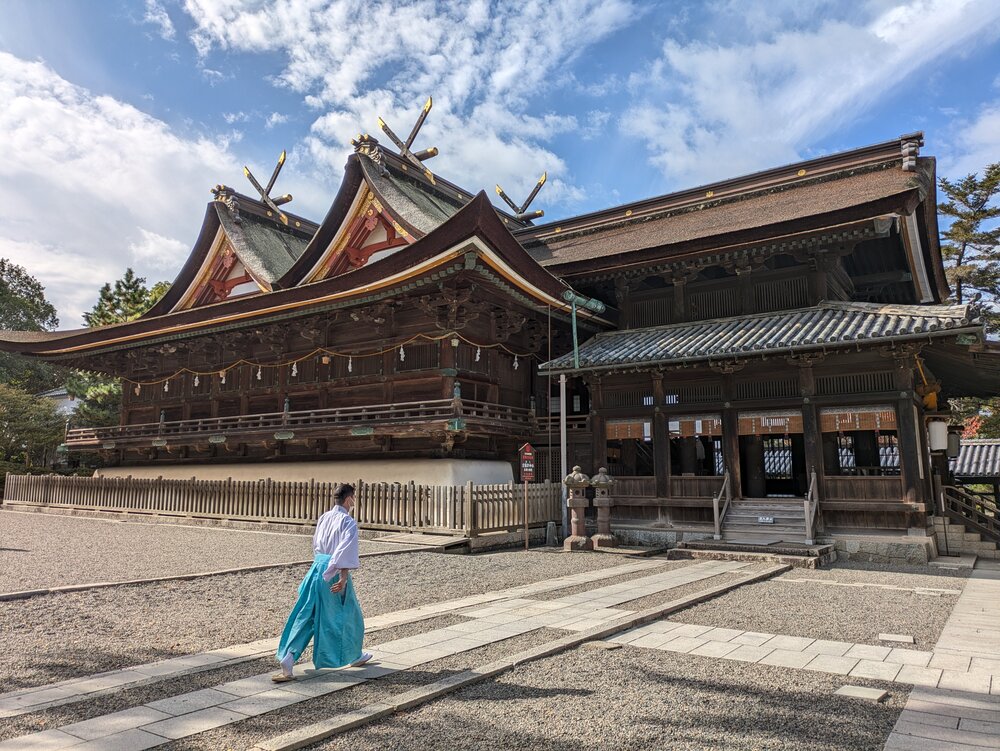
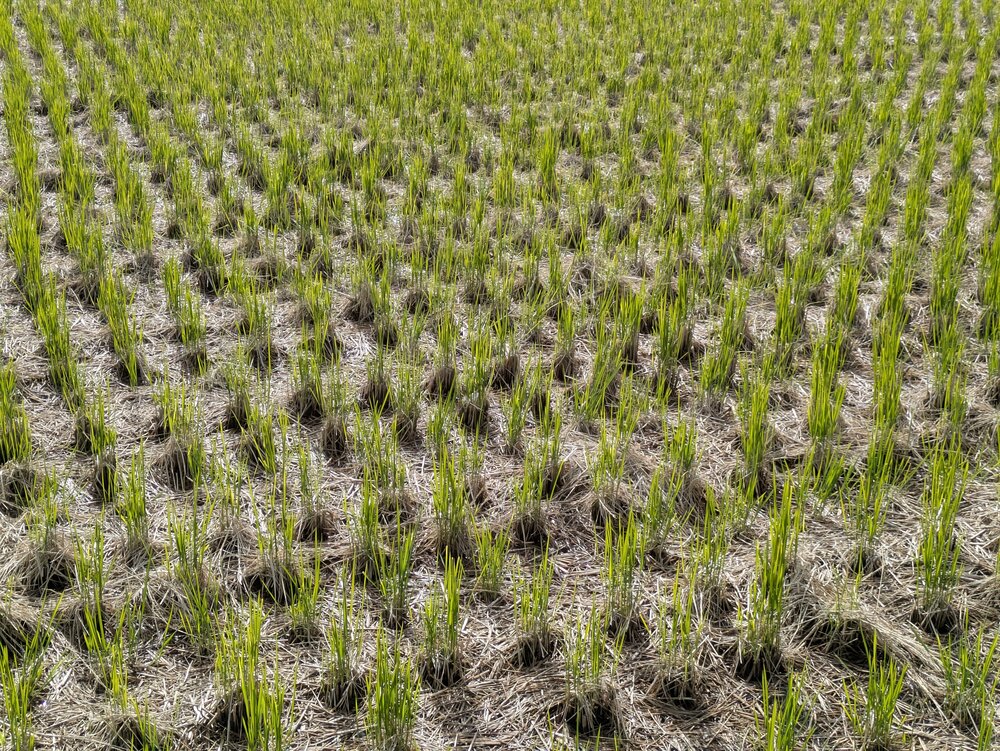
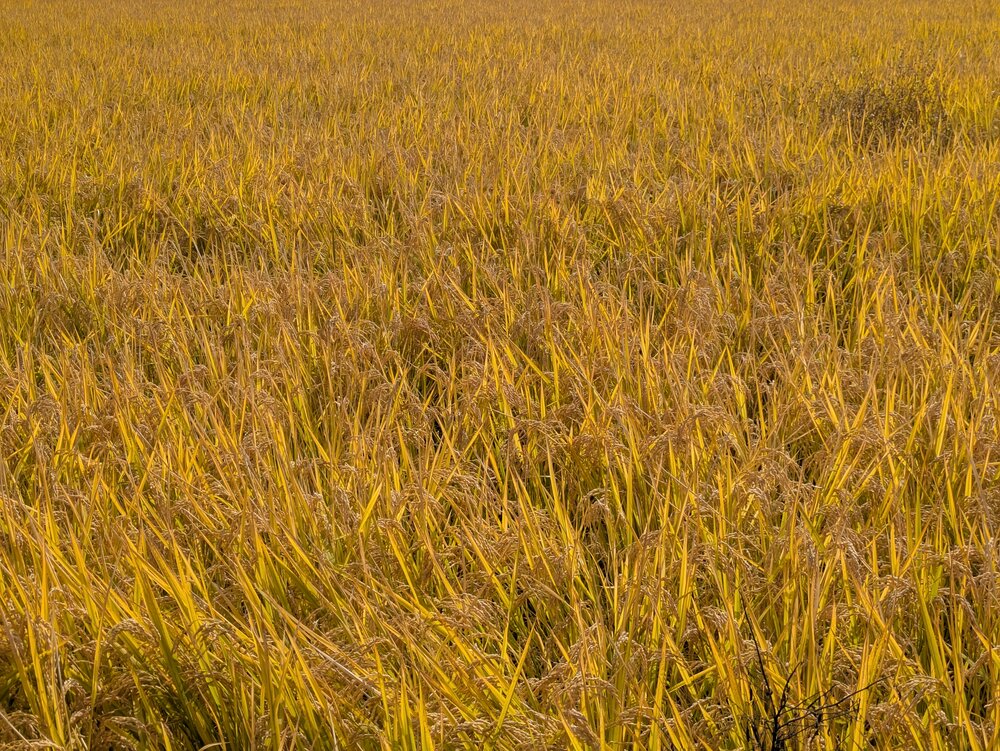
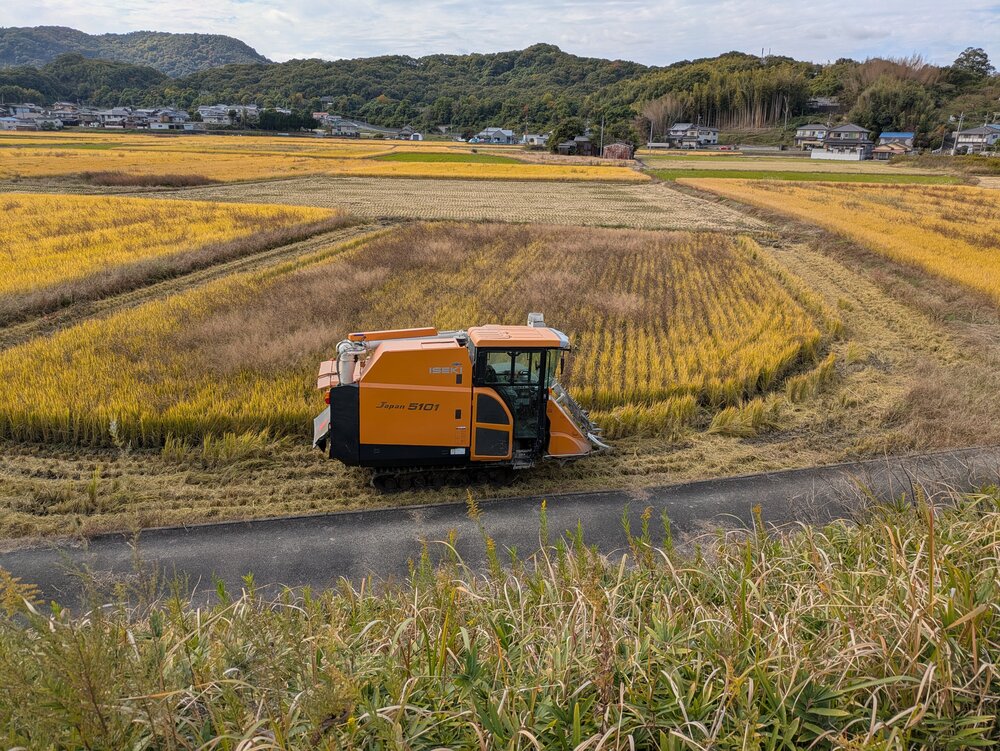
West of Okayama, the land opens out into an agricultural area known as the Kibi Plain. Since this is a flat area, Megan had planned that we spend the day cycling - so we did. There are some ancient burial tombs to look at too, but they were not as interesting as observing the farmers working the rice fields. It appears that they operate some kind of crop rotation system since we observed fields in all states from fallow through newly planted to mature and being harvested. Of course, this lent a very colourful aspect to the landscape. We rented bikes from an old couple at one station and dropped them off at another one. The couple we rented from insisted on explaining the entire route to us (in Japanese) which was rather futile since a) we only know the words for right and left and b) the route is very well signed along its entirety. Along the way we also explored the Shinto shrine Kibitsujinjakairo. Amongst other things, this has a covered wooden "veranda" that is some 350m long - something we have not seen before.
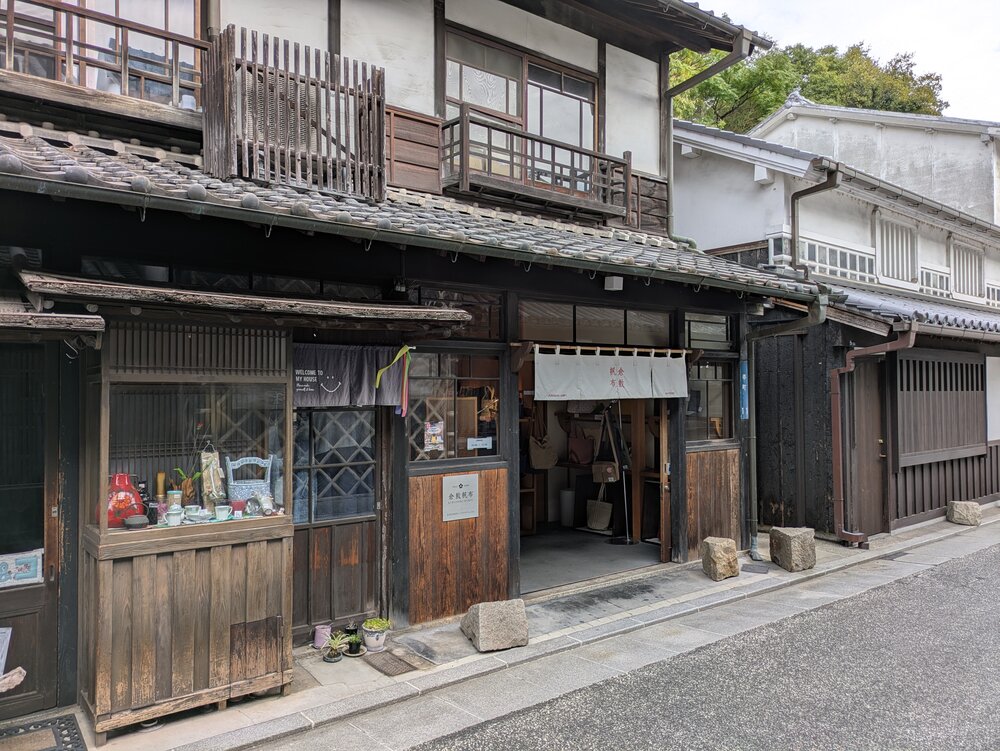
We also took a train to Kurashiki which is famous for its old buildings in what's known as the Bikan Historical Quarter. We are just across Japan's Seto Inland Sea from Takamatsua which is a place we stayed in on our last trip. We ambled the streets, Steve ate a curry and cheese donut. In addition to the old buildings, this area is famous for denim, believe it or not. Whilst we didn't partake, we did see a few shops selling high-end [expensive] clothes. There are also numerous outlets for so called Bikan pottery, but that is for another day. We did visit one of the old 1700s houses and were lucky enough to be shown around by a member of the family that owns it. The construction was fascinating and it was interesting to be shown around a large merchant's house.

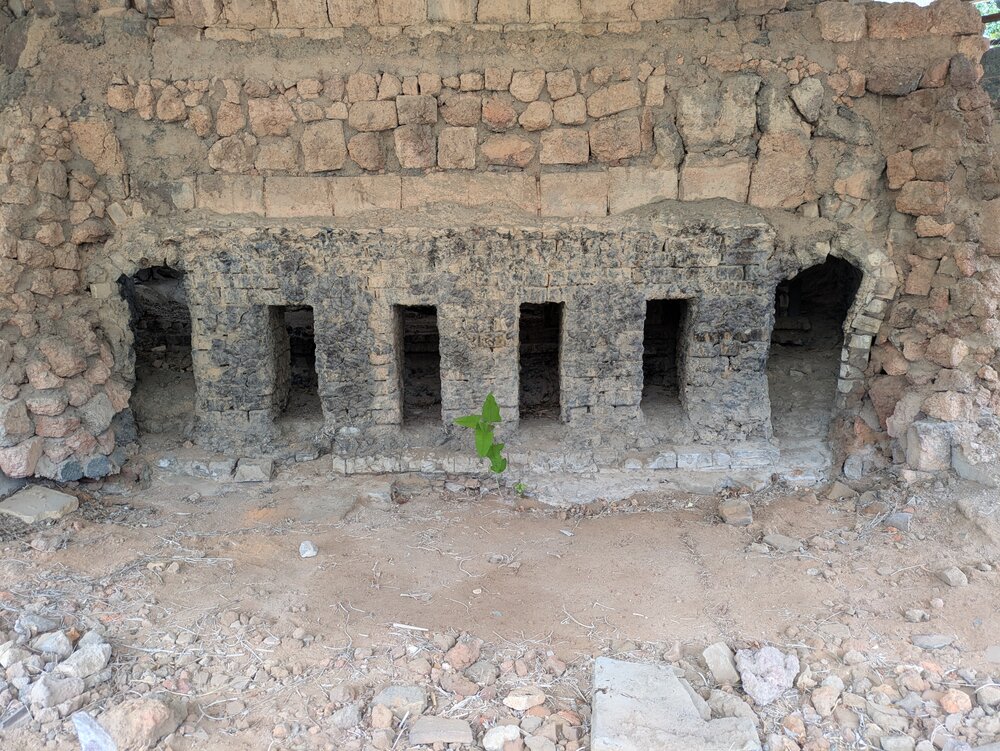
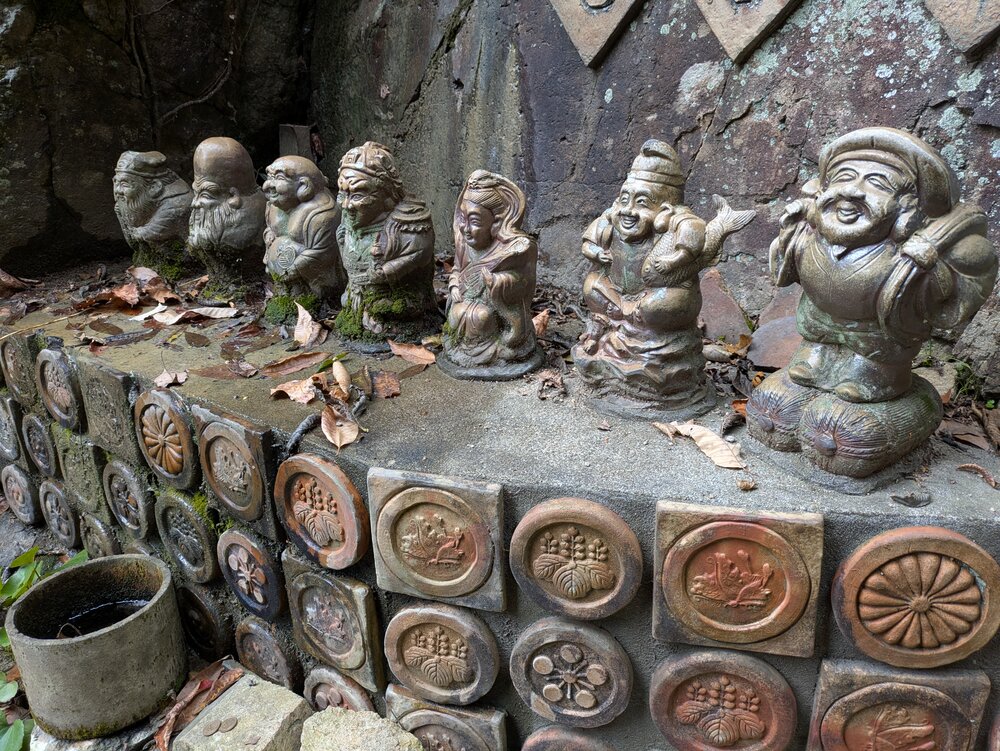
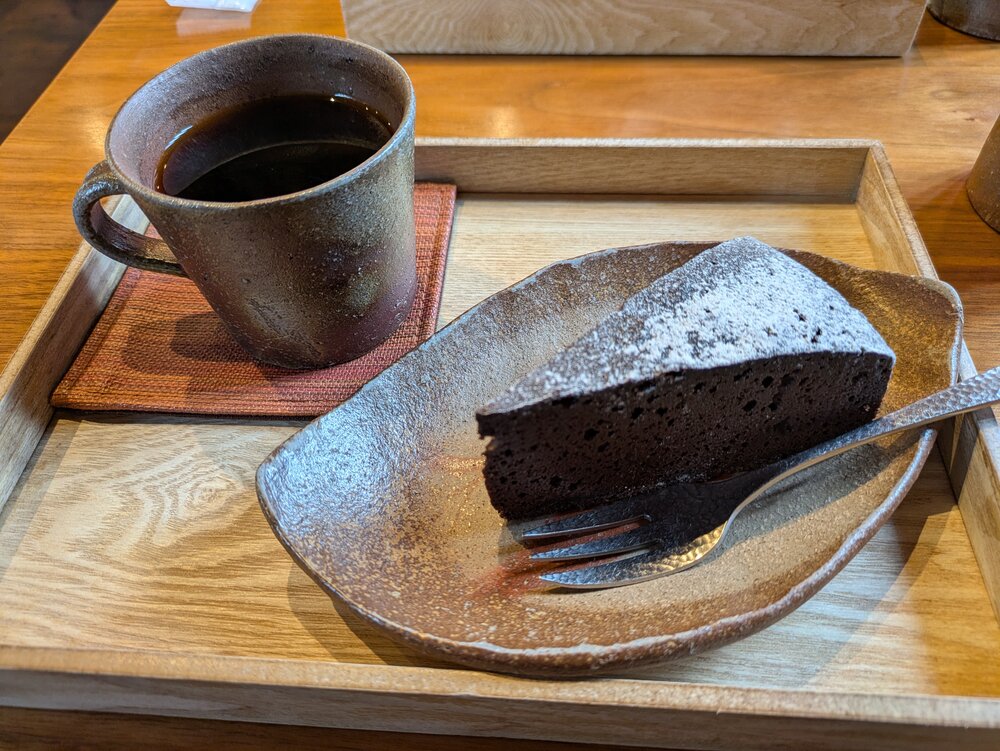
On our final day, we took another trip out by train, this time to a place called Imbe. This is famous for its pottery and, in addition to visiting 1001 pottery shops, it is also possible to visit some of the kilns in the town. A kind local lad showed us around their family kiln and a famous dude who spoke great English showedd us around his. The problem with Bizenware (as the pottery is known) is that all the pieces are made by hand and the firing process takes days if not weeks. As a result, the kilns are large and are only fired once or twice a year. This is generally done in the Spring as the weather is optimal both for the pottery and the people having to work the kilns. Needless to say, we didn't see any kilns in action. The Bizen pottery is made from clay that is dug out from underneath rice fields. The skill and uniqueness with this pottery is in the firing process. The clay can be made to take on all sorts of different colours and properties depending on where in the kiln it is placed. The kilns are built on a slope so that different areas attain different heats and sections are run for different lengths of time. Additionally, the clay is not suitable for glazing, but hot ash settling on the pieces creats a kind of natural glaze. Inevitably, with all this going on, all the pieces are different and the potters don't know what they are going to end up with until the process is complete. There is also quite a bit of wastage.
Okayama proved to be a good place to be based with a number of good day trips out. It's a pretty happening city and it is clear that we are no longer out in the sticks. The vibe is a bit more edgy as stated. However, it is probably not a patch on Osaka which is our next stop and which is firmly on the tourist circuit. We shall see.
Some Pictures