![[Steve & Megan's Travelog]](../images/banner.jpg)
We trundled up from Nara to Kyoto travelling in the opposite direction to everyone coming down to feed the deer and ogle the Daibutsu. How predictable these tourists are! From Kyoto, we took Shinkansen Hikari 506 to Nagoya. Barely had we sat down than we were being told to be ready to get off the train before it stopped as the train would be departing Nagoya shortly after arriving. Luckily, we managed to leap out in time and found ourselves in Nagoya - not a place that features on many tourist itineraries. We will be here for three days before sadly making our way back to Tokyo for the trip home to frozen Blighty. :(
Nagoya
Since the trip from Nara was so short, that gave us time to take a quick look around town. As we are old hands now at navigating obscure foreign subway systems, we jumped on the Nagoya Metro and travelled up to the castle. Nothing even went wrong.
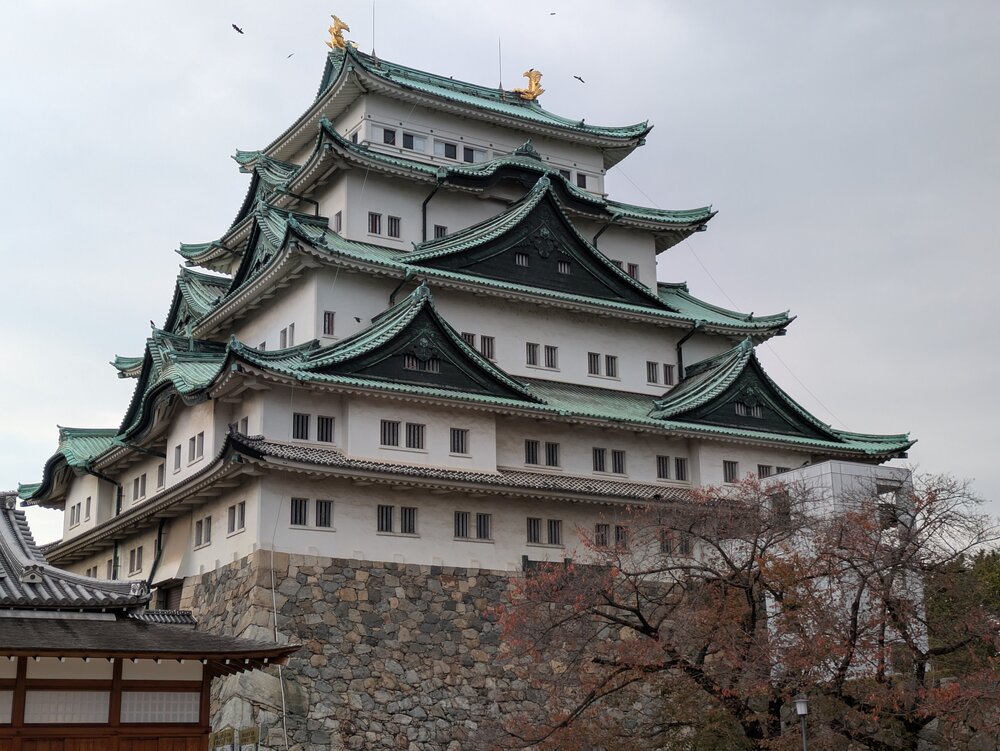
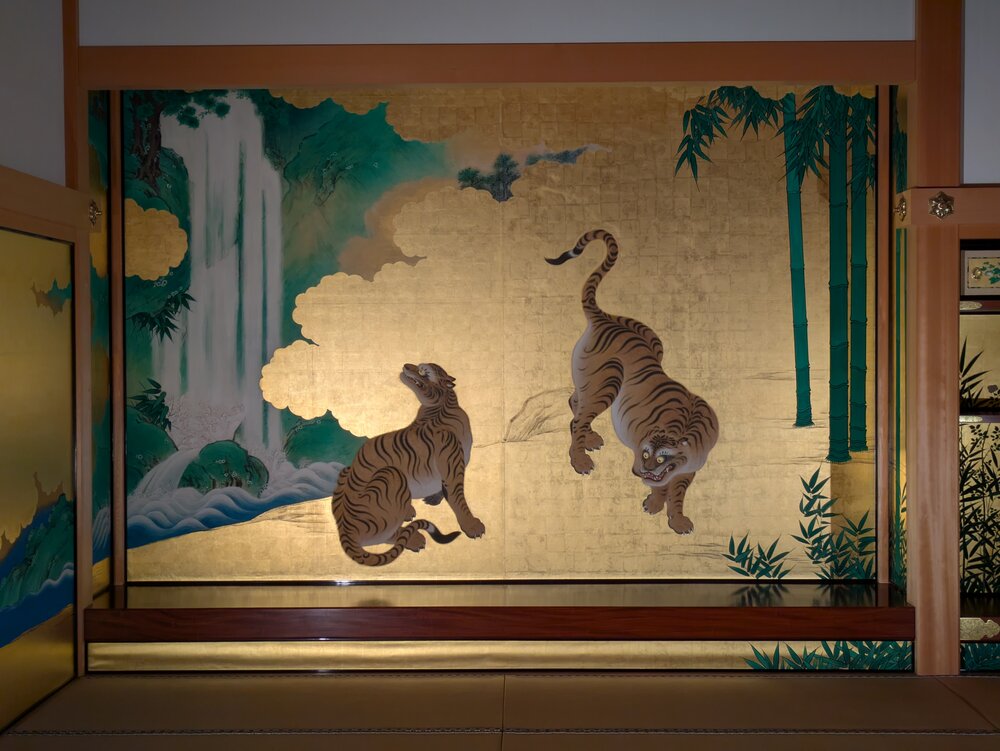
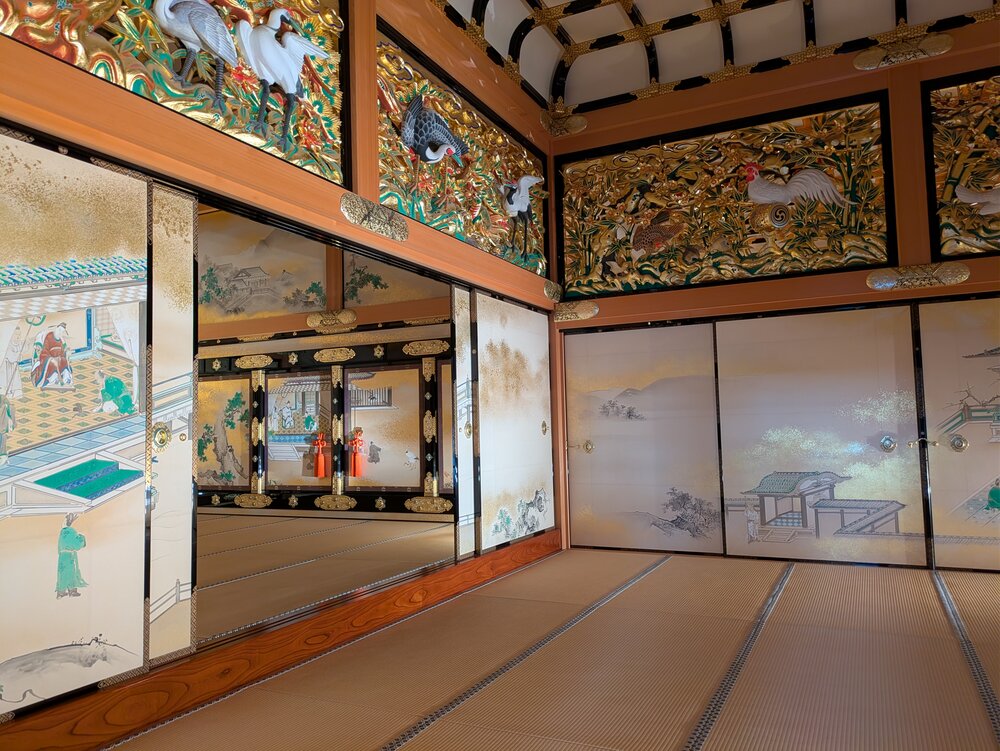
As one might expect for a large Japanese city, there is a castle here and it looks like many of the other ones we've seen. Nagoya castle was build in the early 1600s and was considered one of the most important in Japan. However, it was heavily bombed during the Pacific War and largely destroyed. Renovations have been proceeding since then, but the castle itself is not open to visitors due to fears of it's ability to withstand an earthquake. The royal palace (Honmaru) has been rebuilt and it is possible to visit this. Whilst it does not have the history or grandeur of some of the old places we've visited, it is interesting to see what the place would have been like when first constructed - specifically the painted friezes that adorn the doors and walls. They look oddly vivid, but that is presumably how they would have been when first painted.
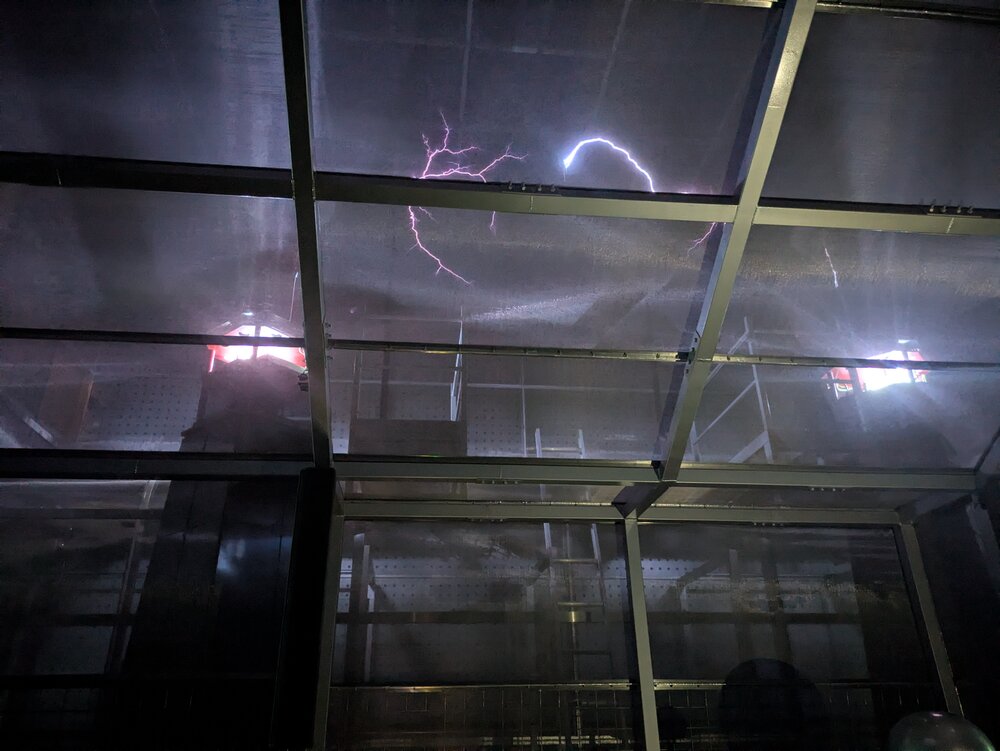
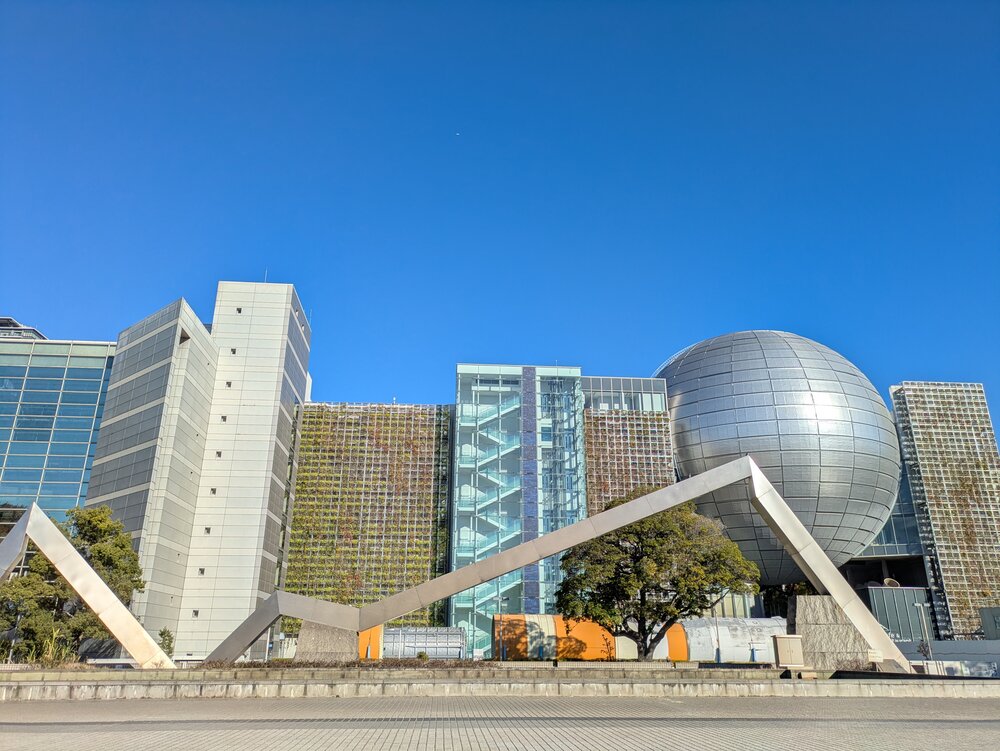
As we approach the end of our trip, we are doing one or two things we might not have done early on. We visited the Science Museum in Nagoya. This is quite an impressive place even if some of the displays and "experiments" are rather dated. Plus, being a Saturday, the place was full of kids doing learning - something rather unheard of in the UK these days. In fact, dated or not, the exhibits were fantastic for kids to explore a range of topics and the staff were obviously excited to pass their knowledge on. We went in a large, walk-in deep freezer known imaginatively enough as the Deep Freeze Lab. Here it is possible to experience Antarctic-like temperatures of -31°C. We also visited the Electrical Discharge Lab where the staff hooked kids up to Van der Graph generators much to the amusement of those of us who knew what was coming. They also had a large electrical discharge machine that sent lightning across a gap that looked about 4m wide. Which by our reckoning equals about 12MV. The Science Museum is also home to the World's largest planetarium, but we'd had enough of Japanese only narration by that point.
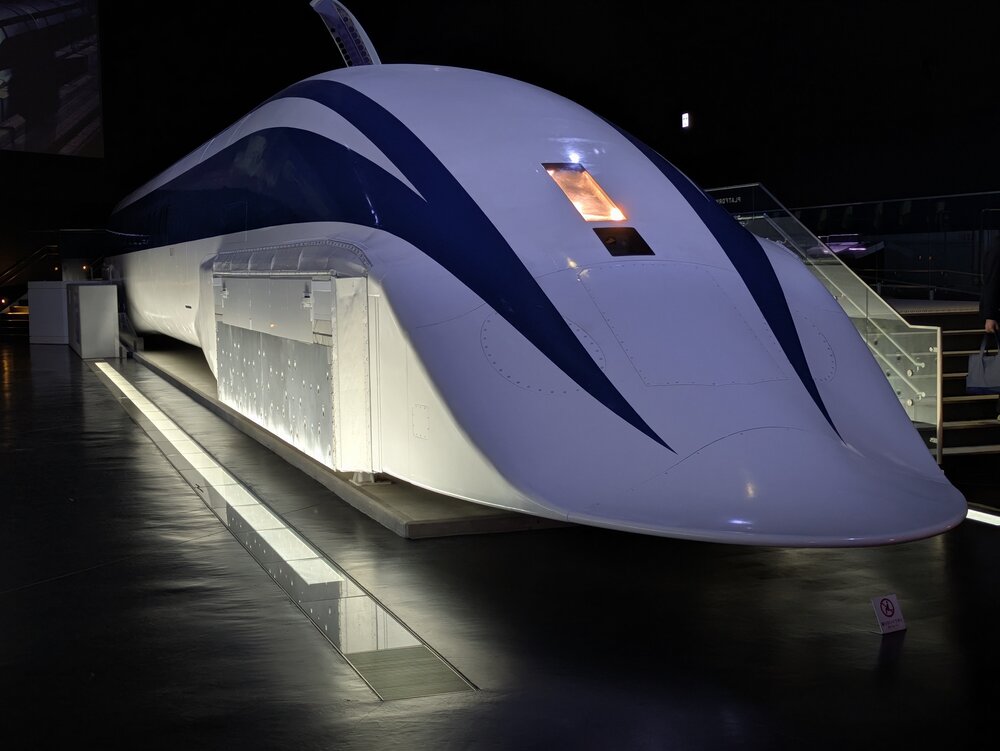
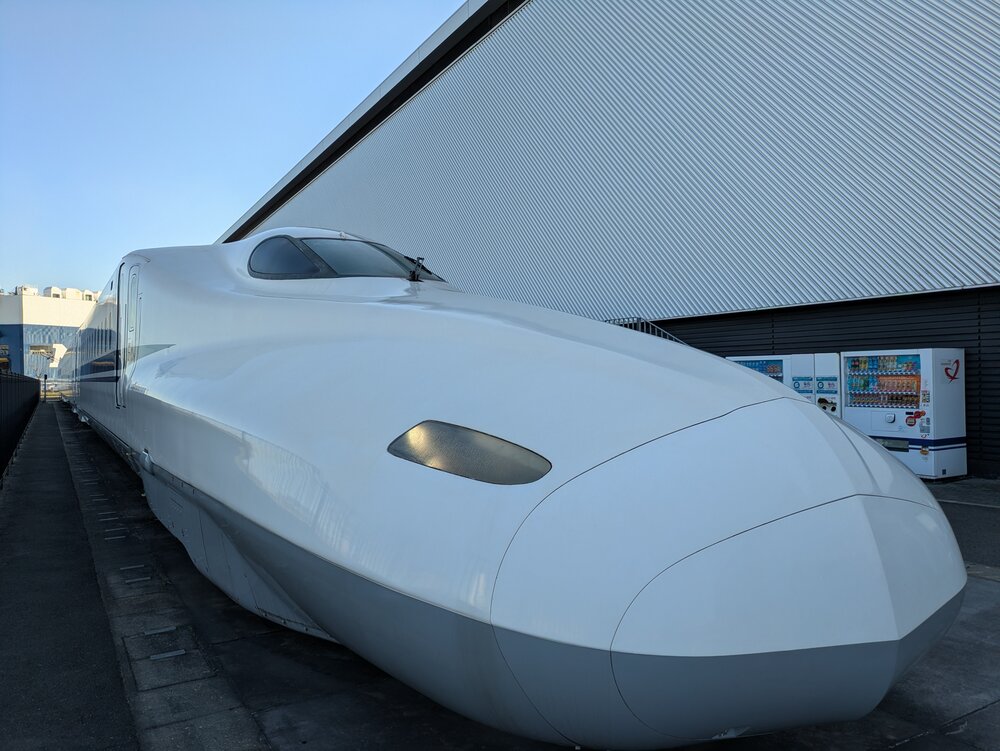
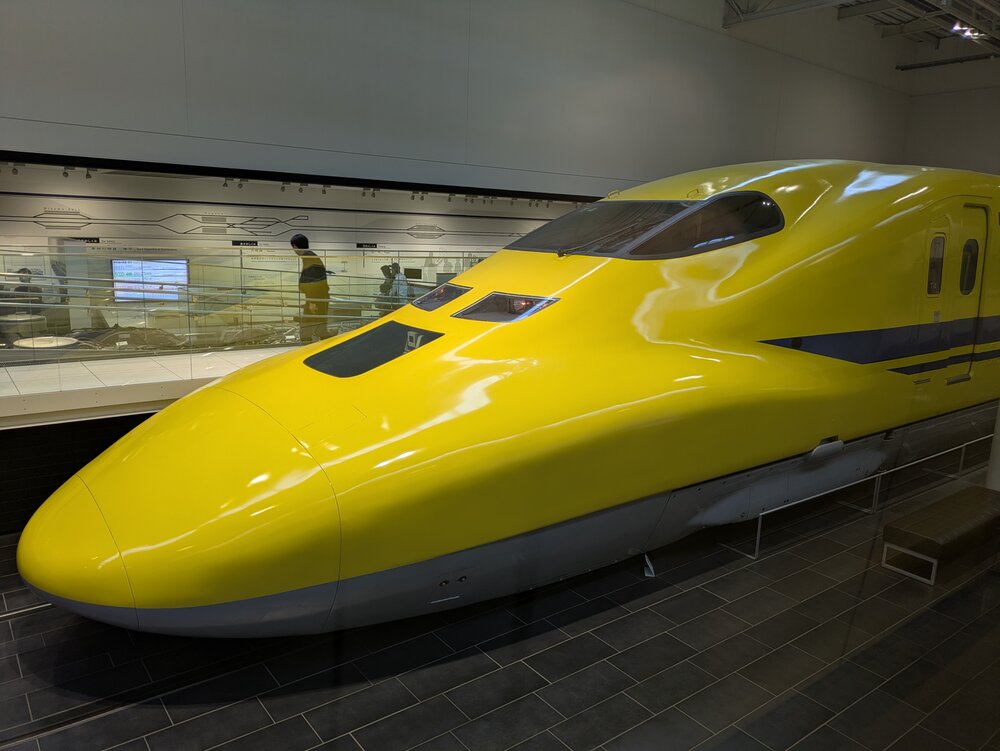
To round out the day, once we'd barged the kids out of the way to play with all the experiments, Megan insisted on visiting the Railway Museum. This is owned and operated by the ubiquitous Japan Railways (known to all as JR). Is is known as the SC Maglev Museum and principally concentrates on the Shinkansen and the upcoming Maglev train. As we stated earlier, the Shinkansen tops out at 199mph. The SC Maglev holds the current world speed record for trains at 375mph. The "SC" in the name refers to the superconducting technology used in the magnets. It appears that the superconducting portion is contained within the train itself and not the track - which makes sense. Up to about 150mph the train runs on rubber wheels. Above this speed, it is lifted about 10cm above the ground by induction. Whilst speed records have been established on test tracks, this is all rather theoretical as JR is having problems funding the construction of actual routes. Currently, the first production service is slated for 2034 - its original opening date was 2027. As for the Shinkansen, the museum houses a number of different models including a maintenance version known as Dr Yellow. Sightings of Dr Yellow are apparently prized by train-spotters. The museum also houses Japan's largest railway diorama (aka big train set). The SC Maglev museum turned out to be quite interesting.
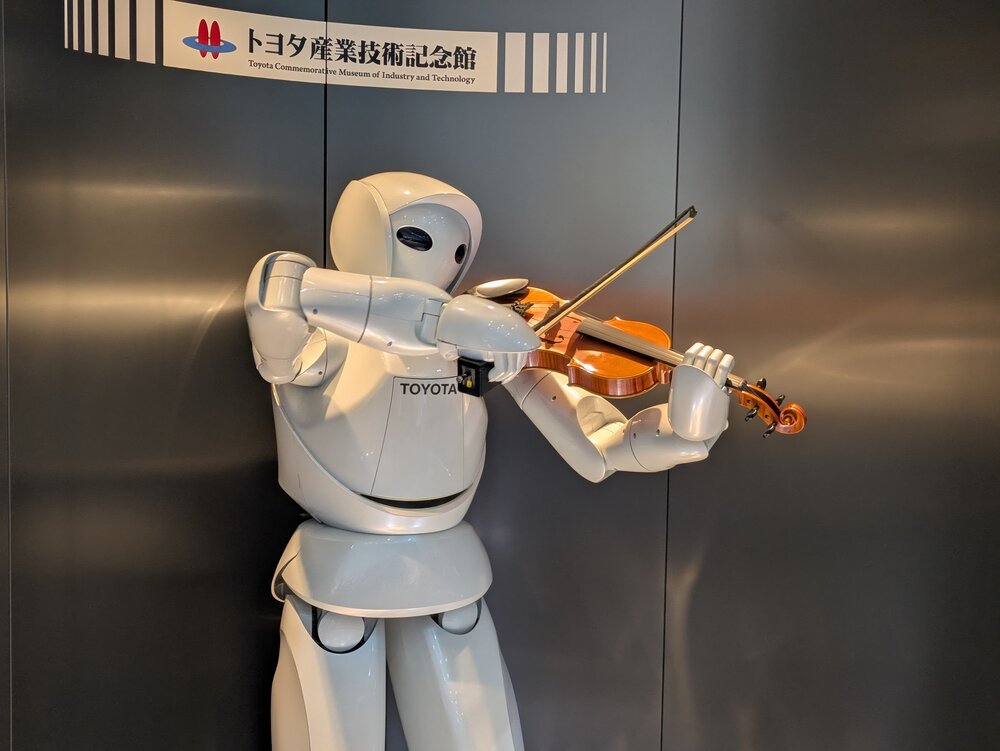
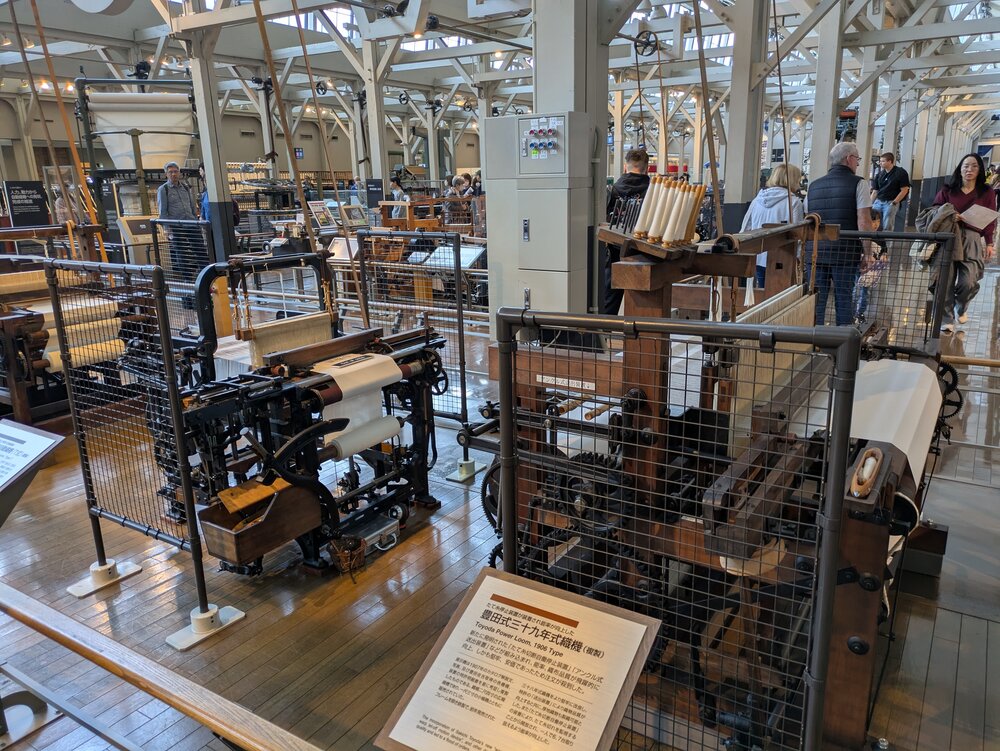
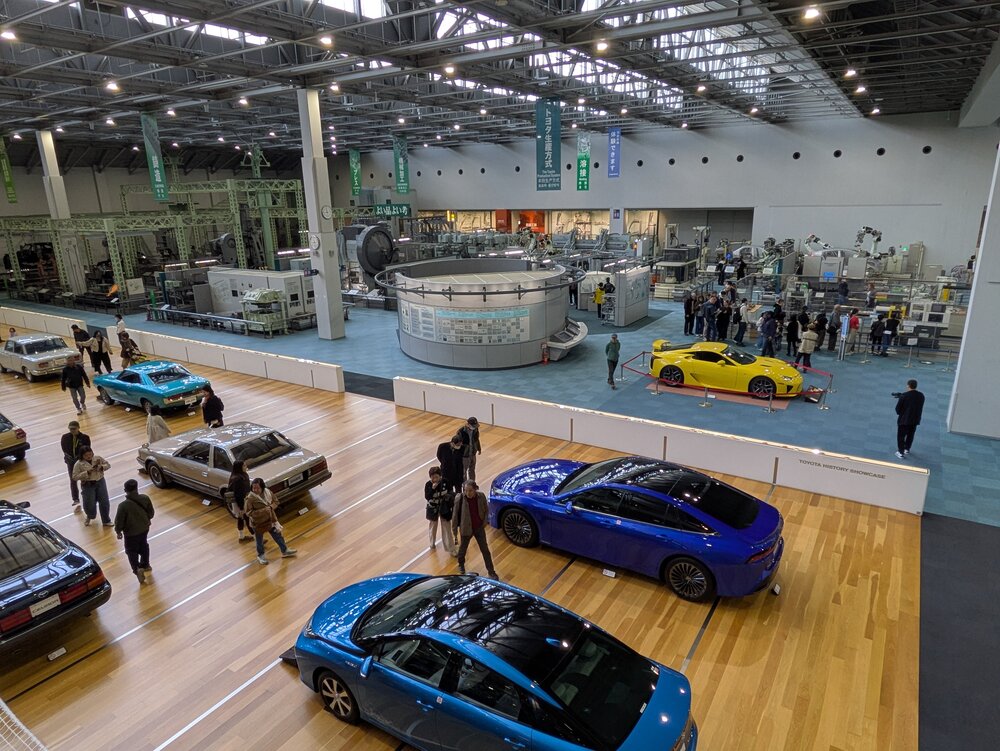
After Megan's excellent idea to visit the train museum, it seemed prudent to follow her wishes to visit the Toyota factory. In fact, this is primarily billed as a automated loom exhibition since that is what the Toyoda family started out producing. There was a very large hall full of various types of looms and lots of information and exhibits about spinning and weaving, etc. Rather oddly, this also turned out to be very interesting. Whilst old man Toyoda was a prolific inventor and specialised in automatic weaving looms, it was young master Toyoda that steered the company towards car manufacturing. He was dispatched by dad in 1929 to the USA to complete the sale of a loom patent. Whilst there, he observed how the Americans were using quite a lot of cars compared to Japan. Upon his return, he was determined that Japan would not be left behind and started to work on car manufacturing. Whilst Toyota today is best known for its cars, the company still produces automated weaving looms. So there you are.
Rather like the science museum, the Toyota factory displays are very much oriented towards education and there is plenty for kids to see and do, which is great. It was still the holiday weekend, so there were plenty of the little rug-rats around. A large part of the display was about the heavy machinery used in the car industry and it was possible to press buttons and move levers to operate some rather large sheet steel presses, mills and the like. Great fun when the kids got out of the way. In a nod to modernity, they also had a display of robotics and even went so far as to have a robot playing a violin. It is just a shame they haven't developed an automated mechanism to tune the violin which, after presumably many years on display, was sounding rather terrible. Either that or the robot simply couldn't play!
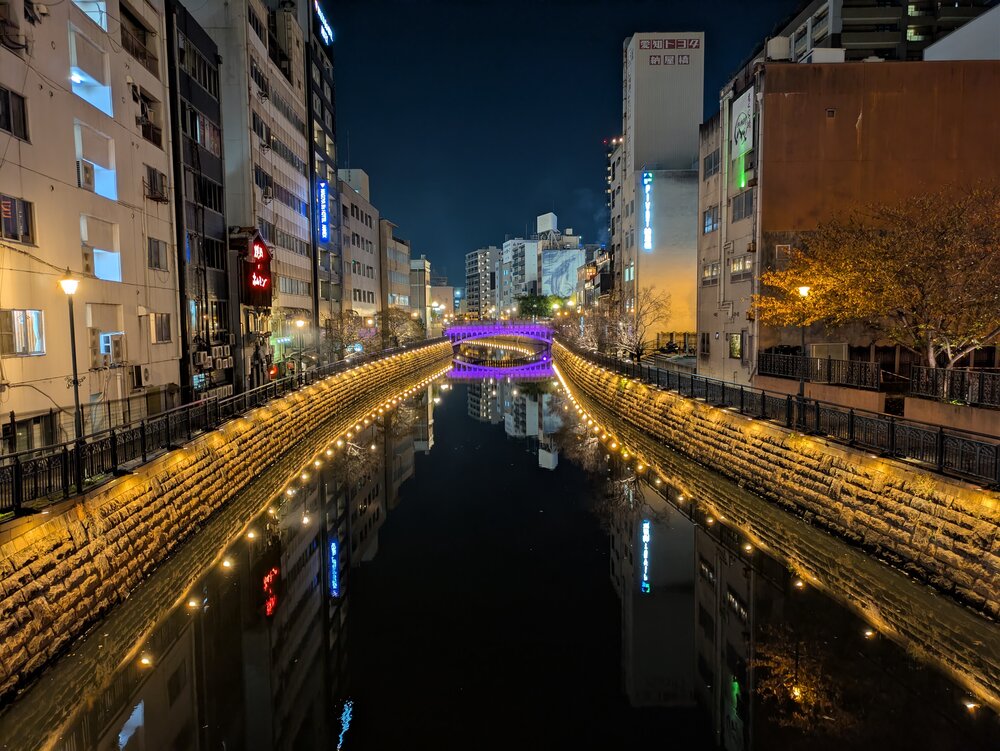
By night, we have found Nagoya to be quite pleasant despite being the third largest city in Japan. Since it is not so touristy, we have not had to compete with the hordes of local tourists queueing to eat. However there are still plenty of people around since it is a holiday weekend. It's a big place, so locations are deceptively far apart (certainly on the map we had). It has to be said that it is somewhat reminiscent of Osaka in that it is not spic and span like one might expect of a city in Japan. It seems that time marches on even here. There is some rubbish to be seen in the streets, people cross the road when they shouldn't and there is quite a bit of smoking on the street which is technically prohibited. Many times we have witnessed people barging to get a seat on public transport and it seems the days of the youth giving their seat up for an old person are gone - even if that seat is dedicated for the old or infirm. Everyone here is absolutely dedicated to spending every waking moment on their smartphone. It's actually a bit scary to see how oblivious everyone is to the world around them. Of course, this is not limited to Japan, but the effect it seems to be having on people can only be described as detrimental. Shame!
Nagoya is pretty much the end of this trip. We will run back up to Tokyo on the Shinkansen (230 miles, 1½ hours) where we will probably pick up a few souvenirs before our flight home. It's been a great trip and we now feel that, after 10 weeks total time in country, we have a reasonable handle on the place. There is a lot to miss about the place and its people, although it is difficult to avoid the conclusion that some of its distinguishing features (politeness, punctuality, cleanliness) are beginning to fade with globalization. The country is also facing some difficult financial circumstances and the tension with China over Taiwan doesn't help. Time will tell how all this will pan out, but it would be a shame if Japan lost much of what makes it unique.
Some Pictures